
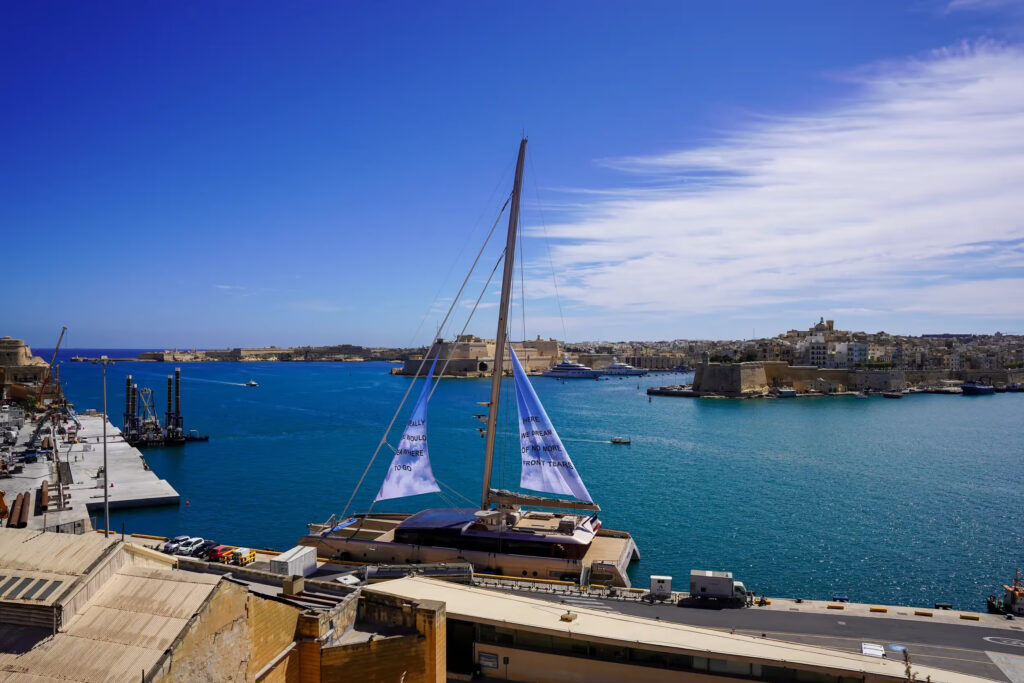
The first weekend of the Maltese leg of the Art Explora festival, on March 23 and 24, will launch the “Ocean Weekends“. In Malta, these two days of programming will be organized in collaboration with the Malta Biennale and curators Sofia Baldi Pighi, Emma Mattei and Andrew Borg Wirth, in partnership with the French Embassy in Valletta. The Ocean Weekend in Valletta will invite the public to a series of round tables, film screenings and inspiring talks, bringing together key speakers from
the worlds of art and science around the issue of the oceans’ climate emergency.
This groundbreaking venture embodies an ingenious blend of art, culture, and technology, fostering creative innovation and paving the way for a transformative approach to tackling complex challenges in food sustainability.
At the heart of this project lies the fusion of digital advancements and traditional agricultural wisdom. By leveraging cutting-edge technologies within the context of age-old farming techniques, this collaboration redefines the boundaries of agricultural production. It ingeniously integrates modern digital tools like AI, IoT, and data analytics with time-tested indigenous practices, thereby enhancing efficiency, productivity, and sustainability in food cultivation.
What sets this initiative apart is its groundbreaking artistic approach. Through a transdisciplinary lens, artists, scientists, educators, and farmers converge to reimagine food production. This convergence not only fosters innovative problem-solving but also sparks creative solutions that transcend conventional thinking. Art serves as a catalyst for unconventional ideas, offering fresh perspectives and out-of-the-box thinking to address the intricate challenges faced by the agriculture sector.
Moreover, the project champions cultural innovation by celebrating the rich heritage of both Switzerland and India. By intertwining cultural narratives and artistic expressions, it cultivates a dynamic tapestry of ideas and practices. Cultural exchange programs, artistic residencies, and collaborative exhibitions serve as platforms for cross-cultural dialogue, fostering mutual understanding and appreciation while fostering innovative solutions to age-old agricultural problems.
Addressing complex problems demands unconventional thinking and ‘out of the box’ creative directions. This project serves as a beacon, advocating for a paradigm shift in how we approach the intersection of technology, tradition, art, and agriculture. It emphasizes the need for holistic solutions that consider socio-cultural contexts alongside technological advancements, steering away from siloed approaches towards integrated, transdisciplinary strategies.
In essence, the Swiss-Indian transdisciplinary project is not just about revolutionizing food production; it’s a testament to the power of creativity, collaboration, and cultural exchange. It demonstrates that when art, culture, and technology converge, they have the potential to create innovative solutions that transcend boundaries, reimagine possibilities, and offer sustainable pathways towards a more resilient and nourished future for all.