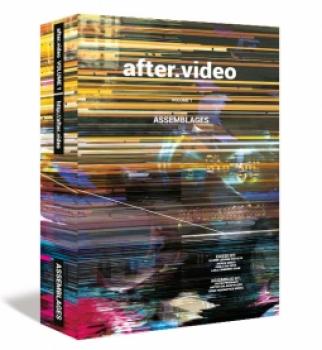
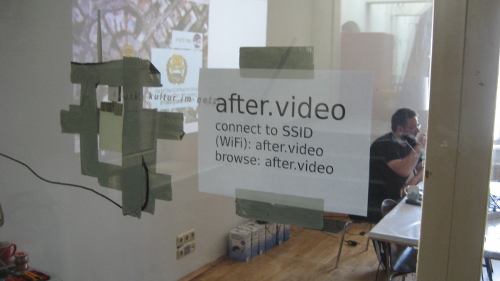
after.video at the indefinite vision symposium @ whitechappel art gallery

after.video will be presented during the indefinite vision
symposium @ whitechappel art gallery, see:
http://www.whitechapelgallery.org/events/indefinite-visions/ (before the
symposium during a workshop on methodologies – see schedule below ->
after.video is in the 4-5.30pm slot)

WORKSHOP: THE AUDIOVISUAL ESSAY WHITECHAPEL GALLERY, LONDON

WEDNESDAY 22nd JUNE

11.30am-1pm. Forms
Themes:
Audiovisual essay forms (close analysis, artistic/poetic montage,
supercut/thematic montage, ‘interstitial’).
Techniques: temporal manipulation, overlays, split-screen, voice-over
Audiovisual essays as supplements to written scholarship and as core
methodology.
Questions:
What types of scholarship are audiovisual essays suited (and not suited) to?
What more could audiovisual essay achieve critically and aesthetically?
11.30-11.45. Presentation: Kevin B. Lee on the current state of the art
11.45-12. Presentation: TBC
12-12.30. Break-out discussions
12.30-1. Group discussion

1pm-2pm. Lunch

2pm-3.30pm. Contexts
Themes:
Role within film journalism, as a critical tool
Role within teaching, as a heuristic tool
Relationship with film-making (‘theory’ vs ‘practice’)
Relationship with artists’ film and video
Questions
How to further incorporate audiovisual essays into mainstream scholarship
via academic legitimation (e.g. increasing publishing opportunities)?
via refinement of the form and its methodologies?
via databasing?
How does the audiovisual essay fit within current copyright law in the
UK and beyond?
Do different distribution models (e.g. peer-reviewed, ‘self-published’,
programmed by cultural gatekeepers) suit different kinds of audiovisual
work?
2.30-2.45. Presentation: Catherine Grant on videographic film studies
and academic publishing
2.45-3. Presentation: David Rodowick on negotiating film theory and film
practice
3-3.30. Break-out discussions
3.30-4. Group discussion

3.30pm-4.00pm. Break

4.00pm-5.30pm. Methodologies
Themes
Terminology (video essay, audiovisual essay, videographic film studies,
digital film studies)
Alternative technologies and methodologies:
Quantitative:
data analysis (e.g. cinemetrics, ECGs and eye tracking)
visualisation – e.g. Volumetric Cinema, Software Studies Initiative
Qualitative:
Annotation (e.g. Popcorn.js, ANVIL, Lignes de Temps)
Creative:
Critical media art (e.g. after.video)
Interactive documentary
Questions
How can audiovisual essay production be connected to adjacent, less
prevalent, digital humanities activities?
What can be learnt from the use of digital technologies in other
humanities disciplines?
What models of collaboration could help audiovisual film scholarship
develop in scope, complexity, and impact?
4.30-4.45. Presentation: David Verdeure on adjacent methodologies
4.45-5. Presentation: Richard Misek on adjacent technologies
5-5.30. Break-out discussions (open)
5.30-6. Group discussion

Viewable during breaks:
Don’t Look Now: paradoxes of suture (interactive video on Mac laptop)
After.Video Assemblages (videos on Raspberry Pi)
Notes on Blindness: Into Darkness (VR experience, at Close Up Film Centre)
 

reTransmission

YT has recently rekindled contact with Indymedia activist network members as part of an initiative to build a new hosting platform, an Activist Media Proxy – AMP.

Little in the way of social documentary, street protest and public information material exists outside of the youtube/googleplex. Of the many attempts to change assumptions, Engagemedia and Undercurrents have lead the way.

Our hope is that in collaboration with activist media makers and producers, further good use can be made of this vibrant social history, to review past action and inform on current struggles.

The first move of the founding group has been to appoint a coordinator and gather together an information base, to establish communication and suitable support framework. With this foundation in place is has been possible to activate new services to begin working with the existing video collections, present tools for annotation and prepare selections for review.

Please visit the AMP project wiki for more information.

The video, audio and text archives will be stored in a web accessible database. Pan.do/ra offers the combination of media processing, context annotation and collaboration management tools needed. Several other media collections are being drawn together in London using this same great system.

Community archives are reactivated at Maydayrooms events where documents are scanned and media resources organised. Their collection features a selection of period film and event documentary, available over their local area network, alongside an extensive document catalogue for researchers to explore.

A complete set of the DAU film sequences, it’s huge image collection of period artifacts and extensive wardrobe as worn during filming and by residents of Kharkiv, features in their intranet media project. The DAU feature film is itself now due for release in 2017 the centenary of the Russian revolution.

4 for four

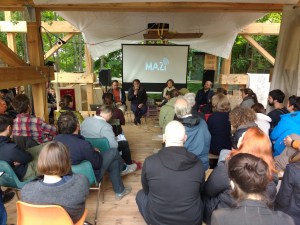
Creeknet, is one of four project pilots being operated as part of the MAZI initiative which will bring together components for a neighborhood network toolkit. This will feature a guide for those establishing or improving on open wireless and offline collaborative systems, advising on cost effective hardware and open source software solutions, whilst refining tactics and tutorials.

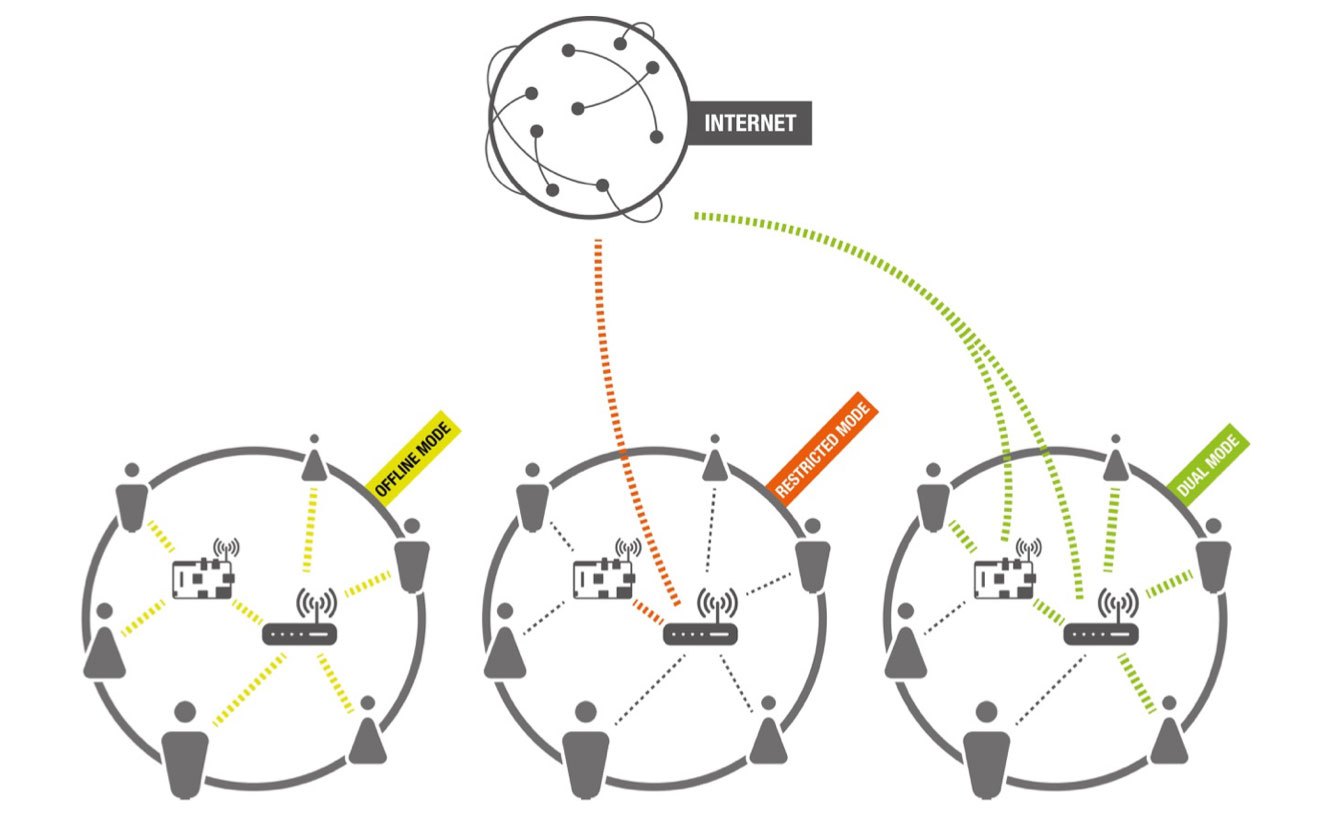
To help co-ordinate and explore the many options, we worked with MAZI partner University of Thessaly, Greece, to establish a suite of software to test and use in our local networks. Etherpad is a collaborative writing tool and OwnCloud is a document and media management system. UTH role is to co-ordinate and consolidate toolkit components and the first prototype, on a RaspberryPi disk image is available for testing featuring these and small selection of complimentary applications. In the simplest mode, presents a ‘stand alone’ wireless access point running webserver and other local services to promote working together. Without internet connection, any requests for webpages are redirected to local webpages listing services and describing options.

During recent workshop at the Prinzessinnengarten in Berlin, we heard about progress of MAZI pilot ‘Common Ground‘ during launch of Neighborhood Academy building in the garden. Their prototype ‘interview station’ enables one 2 one interview recording and publishing process. Completed interviews are published directly to their offline server prototype  for review and comment by those visiting the garden academy. The same combination of powerful software options and offline network server was in use during the recent Unmonastery at Kokkinopolis, a two week meeting in the Olympus mountains in Greece where it was first tested by them for communal exchange and interaction.

Kraftwerk1 housing cooperative in Zurich is working with Nethood to identify suitable evolutionary path away from their proprietary cloud information system. Their inspirational living model has been a great success and with growth of cooperative housing across Switzerland there is increasing interest in mapping of methods and monitoring of progress not least at Inura.

The ‘Creeknet’ pilot began in April 2016 describing first impressions and identified groups from the local area whom SPC have worked with in the past, to propose key issues and ideas to explore.There are many aspects to consider, changes to the built environment here are continuing at a rapid rate, some groups are being sidelined with conditions for living and working in the area facing disruptive challenges as well as opportunities.

Our role as advocate for user owned and operated information infrastructures is well known in the area. SPC worked with individuals, neighborhoods and local businesses from 2001 on a series of DIY low tech network projects, last represented by OWN, the open wireless network established 2008. Today the effects of population churn, rise of portable computing, concerns for personal security as well as long term exposure to the elements have reduced the operational status of OWN to a shadow of it’s former self.

The afterglow of positive experiences gained over eight years is now being rekindled with the prospect of renewed offline network development, expressing a passion for the ‘local’, celebrating neighborhood news and wider collaboration. The access to broadband provided by OWN in the area, needs re-doubling if it is to serve the co-ordination demands of MAZI ‘offline’ network development and monitoring of process. This process is now underway with new connections being upgraded between Deckspace in Greenwich and Minesweeper on the creek. From there we will continue to redistribute access to locations of activity nearby.

Monumental civil engineering and relentless apartment block building is underway throughout the area, bringing changes to the environment for everyone. For some it will mean the end of affordable rents for both domestic and workspaces. For others, this area of London is where overheads are still comparatively low. It will certainly result in increased traffic, noise and pressure on services, a transformation in the mix of people and expectations.

Pollution concerns over quality of water, air and electrosmog, processing of rubbish and recycling urgently seek answers. The Creekside Centre and other Deptford Creek groups are already working on the creeknet MAZI pilot to build on existing relationships and operate more effective information sharing and neighborhood network solutions. With these issues in mind early installations will include a range of passive environmental sensing of sound, light and radio.

The opportunity for social interaction in the area is limited to the few publicly accessible parks, pathways and the remaining pubs alongside west and eastern banks of the creek. A few new public areas have being created which have yet to be understood and adopted. For example the new footbridge at the mouth of the Deptford Creek, completes the Thames path between Deptford and Greenwich, a perfect place to focus attention and present a MAZI zone.

Besides the Screen conference

The 2016 conference in Coventry marks the end of a cycle of activities sponsored by the British
Arts & Humanities Research Council , meaning to articulate an international research network
devoted to the many territories of dispute in the contemporary arrangement of audiovisual
media, such as piracy, curating, and projection practices.

The conference series Besides the Screen began in London in 2010 at Goldsmiths College,
University of London. The event meant to gather research projects focused on an apparently
secondary subject in the field of screen studies: the instances of film distribution and
consumption. By that time, it already seemed important to promote debates around these topics,
considering that some of the most meaningful effects caused by computer networks on
audiovisual media are connected not to image production, but rather to the emergence of new
dynamics of circulation – from peer­ to ­peer filesharing to mobile screens, from VJing to
video­ on­ demand.

Wednesday 20th July 2016
Ellen Terry Building, Coventry University

14:30 ­ Coffee and Registration (Foyer, Ellen Terry Building)
15:00 ­ Conference Welcome (ET101)
15:15 ­ 16:45: Panel 1 (ET101)
17:00 ­ 18:30: KEYNOTE ­ Charlotte Brunsdon & The Projection Project (ET101)

­­­­­18:30 ­ 19.30: Break­­­­­

19:30 ­ Exhibition opening and music from Accelra @ The Box, FarGo Village

Thursday 21st July 2016
Ellen Terry Building, Coventry University

10:00 ­ 11:30: Panel 2 (ET101)
11:30 ­ 12:00: COFFEE
12:00 ­ 13:30: Panel 3 (ET101)
13:30 ­ 14:30: LUNCH
14:30 ­ 16:00: Panel 4 (ET101)
16:30 ­ 17:30: Performance (Ricardo Carioba) (ETG34)

­­­­­17:30 ­ 18.00: Break­­­­­

18:00 ­ Leafcutter John (Performance & Q&A) @ The Box, FarGo Village

Fri 22 (Ellen Terry Building)
Ellen Terry Building, Coventry University

10:00 ­ 11:30: Panel 5 (ET101)
11:30 ­ 12:00: COFFEE (Foyer)
12:00 ­ 13:30: PANEL 6
13:30 ­ 14:30: LUNCH (Foyer)
14:30 ­ 16:00: KEYNOTE ­ Nelson Brissac (ET101)
18:00 ­ Performance (mirella & muep) (ETG34)
20:00 ­ Close

Keynotes

Projection, the Moving Image and the Transition to Digital
Charlotte Brunsdon, Michael Pigott and Richard Wallace
This plenary session will be presented by Charlotte Brunsdon, Michael Pigott and Richard
Wallace who are working together on the AHRC­funded Projection Project (2014­18). This
multi­method project takes projection as its starting point in an exploration of cinema’s transition
to digital. In this presentation we will outline some of the premises of the project, and present
findings which range from interviews with former projectionists to sounds from the projection
box. Our project includes archival and oral history research into the neglected history of the
cinema projectionist through which we challenge the primacy of the image in theorisations of
cinematic specificity, revealing in contrast the role of hidden labours of cinema exhibition. While
we are attentive to the human cost of the transition to digital in terms of redundancies and
redeployments, we are also concerned with the new possibilities of the emergent uses of digital
projection outside of the cinema space. Here we attend to practices – such as projection
mapping ­ enabled by the portability and flexibility of digital projectors, and situate them within a
long history of projection. By investigating the role of outdoor projection as a means of both
advertising and protest, as well as the figure of the nightclub VJ, the project seeks to identify
continuities and differences that pertain within the extra­cinematic everyday uses of moving
image projection. As a multi­part presentation we will seek to give a sense of both what is
hidden and lost in the projection box, and what is imagined outside it in a wide range of venues
and practices.
Professor Charlotte Brunsdon has been Principal Investigator of the Projection Project. Her
most recent research had been concerned with the spaces of film and television and she has
just completed a book on T
elevision Cities t o be published by Duke University Press in 2017.
Dr Michael Pigott is co­investigator on The Projection Project and author of J oseph Cornell
versus Cinema (2013). He teaches visual cultures and audio­visual performance at the
University of Warwick. He also works as an artist and has been known to do some VJing.
Dr Richard Wallace is Research Fellow on the Projection Project. He has research interests in
British film and television history and technology, historical research methods and screen
documentary and has published in the J ournal of British Cinema and Television.
All work at the University of Warwick, mostly in the Department of Film and Television Studies.
projection.project@warwick.ac.uk

Triangulated

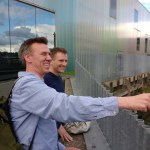
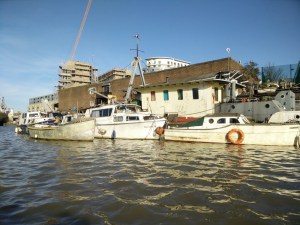
The brexit debacle has so far proved to be a substantial distraction from much else going on this week. However, work toward the first of many MAZI reports to satisfy conditions for EU support, has been completed on time. Our academic partners at the Open University now have an additional part time researcher (Gareth) in post to help prepare the ground work for the next phase of neighborhood engagement which SPC are for preparing now. Here is Mark pointing out the Minesweeper floatilla on the creek.

We haven’t had many visitors to the recent Brookmill Park, Monday meetups, though great progress has been made with those attending to clean and prepare the space for Redstart Arts who take up residence later this summer. Their current exhibition at the Deptford Lounge is result of 8 months work with learning disability artists and called ‘weatherSCAPE’. It has been installed in the 4 story atrium space there, very impressive!

Much of the Brookmill conversation so far, has been concerned with how to improve on use of the park and encourage a wider appreciation and support for the events and activities organised by the ‘friends’ group. Last weekend YT joined the Picnic and met with near neighbors as well as some more familiar faces. There was great interest in the MAZI activation initiative using the park keepers building and many questions on what and how might be possible. We sat in dappled light beneath a giant London plain tree with it’s bat and bird boxes, adjacent to the large pond with resident heron and frolicking water birds, to share stories, savories and cakes!

Later this month we will meet again with MAZI partners Common Ground in Berlin to review progress of the new Prinzessinnengarten building in progress  and enjoy the bloom of midsummer. Terry Edwards has been in a battle with slugs at the small gardens in Crossfields Estate he tends and will join us on the trip this time.

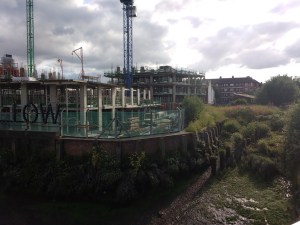
Here in Deptford there is no shortage of building work underway as seen here in this site view adjacent to CET. Directly opposite, preparations for the Tideway tunnel excavation are also advancing quickly. Intensive building work in progress on both sides of the creek reach are reaching crisis point as project increasingly coincide and collide. Any plans for environment monitoring, neighborhood awareness and useful responses may be foiled if we don’t make some rapid progress before long.

Knitted out

The quest for suitable, sustainable network equipment is an ongoing and fascinating one.  New products with great capabilities, low cost and power, compactness and accessibility, hold much promise.

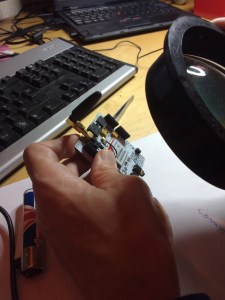
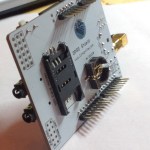
The first to catch my eye during a recent visit to Raylab is this GPRS shield v1.0. It’s a compact and versatile board featuring audio I/O, generic GSM module and 12 GPIOs. It is also fully compatible with Arduino modules so that existing controllers, radios and sensor packs fit right in!

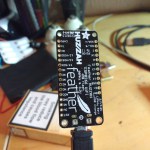
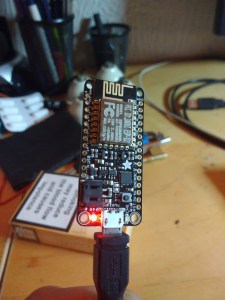
Next on the desk was long awaited Huzzah! IoT ‘feather‘ which Alexei ordered some weeks ago and so popular it’s rarely in stock. Preliminary test returns simple but reassuring responses.. This tiny board boasts memory, processor very low power consumption and frilled with many connection options, amazing value at £12.

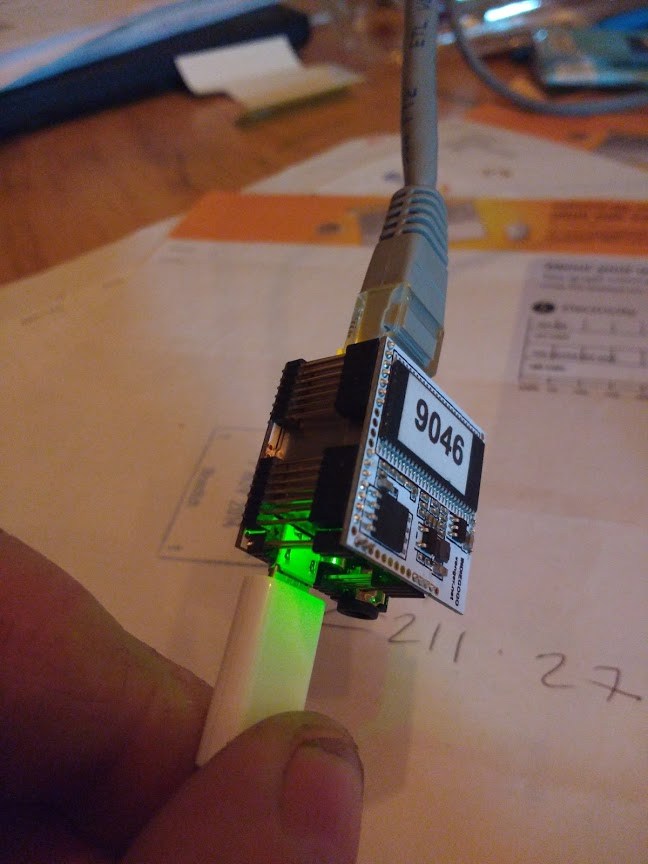
A third product blinking innocently away across the desk,  had been delivered just that afternoon. Vocore.io is a fully featured mini OpenWRT SoC (system on chip) module with ethernet and USB dock, wireless and RAM enough to make itself indispensable. £40 ish.

Our MAZIzone assignment to identify and utilise the best of options for neighborhood activities and network development have already drawn us close to a series of interesting options for environment sensing , information storage and energy management. It’s a fragmented story so far, but one that we are bringing into focus, piece by piece.

When we next link up with guys at University of Thessaloniki research department in Volos there will be much to discuss. They have been working with a selection of off the shelf and custom pico pc boards and adapters to interface a wide range of environment sensors to track temperature to radiation and drive Bluetooth, Zigbee, Wifi and LTE radios.

after.video @ AMRO

Art Meets Radical Openness
Festival dedicated to Art, Hacktivism and Open Culture

“Art Meets Radical Openness” is a community festival, an open lab, and a meeting point for artists, developers, hactivists, and idealists involved with the culture of sharing and communal production. They are catalysts that spark new discourses and open up new directions of thinking. Free Open Source Software, open tools in general and the use of free licenses are the precondition and basis for the digital practice of a community like this, which impels social transformation. This tangible transformation goes beyond a digital practice and also changes our real life.

This exhibit and/or paper presents the after.video video book, discussing the topic of “Online and offline platforms for the exhibition and circulation of audiovisual media”. The after.video book represents a fusion of the modes of the digital/networked publication and the traditional form of the physical (wasted?) book. There have been first thoughts about the links and exchanges of the old traditional format of the book and the possible accordances of the digital book on a more practical level. The theoretical framing is given by thinkers of the book like Bob Stein: “the computer screen became a place for synchronous and asynchronous conversation. As web technology improved people started putting essays and books in a browser with a dynamic margin where readers could make comments visible to everyone. Over the past ten years the experience of dozens of ‘social reading’ platforms suggests that books will become places where people congregate to hash out thoughts and ideas.” (1). Practically this fusion of the possibilities and formats of new digital media (like video) and traditional academic text-form is also making headways – like exemplified in the ‘Frames of Mind’-project (2). Open Humanities Press has taken these beginnings and fused different pre-existing trajectories of development as instantiated by above projects and conceptions, and fused them with the idea of rendering the digital book after.video as a physical device, much along the lines already taken in the landmark project “The Weise7 in/compatible Laboratorium Archive” (3). This conceptual leap represented by the dual-mode video-book enables the Centre for Digital Cultures (4) and Open Humanities Press (5) to not only go beyond the format offered by the first two volumes of Video Vortex (as put out by the Institute for Network Cultures (6), but also beyond the current state of digital publishing in media-rich, video-centric contexts, thus presenting a unique publication which reflects upon video theoretically, but attempts to fuse form and content in its own dual format.

We also participated in the Liquid Democracy workshop, a report (in German) can be found here.

Energising Interest

Though our initial work with Minesweeper Collective as part of Mazi project pilot in Deptford Creek, we have talked a lot about how improvements to energy infrastructure could have a huge impact on quality of life and sustainability for those living on boats or otherwise off-grid. Wind turbines and solar collectors have long been used in these situations where fixed land connections for mains power are scarce. Harvested energy is stored in large batteries which need monitoring and management then safe, low loss re-distribution.

Boattr project illustrates some of these issues with DIY solutions to regulate energy and integrate with on board computers and sensors. Various initiatives are underway to bring these issues together and offer complimentary tool for those setting up autonomous energy systems.

Vexed, hashed and ported

Battlemesh 09 was the latest in a series of intensive exchanges organised and attended by the prime of mesh firmware developers, hardware hackers and community activists – An international movement of open wireless network innovation with it’s root in the earliest moments of net culture.

More than 80 contributors from Korea, Colombia, India, Argentina and across Europe gathered at the Faculty of Engineering in the University of Porto (Portugal) for a week in the deep code of OLSR, Babel, B.A.T.M.A.N, BMX and Batman-ADV, each contenders for eternal glory!

All use the OpenWRT operating system first issued at the outbreak of contemporary mesh networking in 2004, when discovery of GPL code in the very affordable Linksys WRT54G router triggered release of it’s proprietary sources for open re-engineering.

Each afternoon lightning talks and presentations were held in a space between the busy workgroups. We listened to memorable accounts from international groups and community actions, a film première of Sarantaporo documentary (Greece) and reviewed GNUnet and netJason projects two of many others listed in the packed event schedule. Our hosts even arranged us a cruise on the Douru River with spectacular views, bridges and fresh air!

Work progressed on setup of the Battlemesh ‘Wibed’ testbed, itself an ambitious and complex set of configurations, to allow for easy switching between competing firmware to enable monitoring of the 30 or so wireless routers now dotted about the university. Inevitable bugs obstructed completion but we start to see results at the eleventh hour, hoorah!

Key members of the OpenWRT developers group gathered to announce it’s community reboot as new project LEDE which resolves to shake off legacy constrictions in the operational structure of the old system. There was widespread delight mixed with a sense of some trepidation this news should schism the project. Overall it seems, this is an overdue shift toward a more flexible approach to future development of firmware for embedded devices, so good luck with that!

Overshadowing the event for all this year is the news that FCC have followed steps taken at EU to legislate a lockdown of firmware on equipment (RED) featuring 5ghz wireless devices, so that critical weather and aviation radar systems cannot be compromised by non standard radio uses. New hardware will not permit firmware modification and improvements by community in the future will no longer be possible! It’s hard to follow the exact conditions that have lead to this unfortunate situation, certainly manufactures have taken flight and entirely re factored their products to adhere to the rules as they understand them, in fear of heavy fines should they fail.

Suspicions were voiced, that telecom interests have influenced authorities to revise controls allowing them capture pubic access spectrum for more exclusive commercial uses. Here is the joint statement from the wireless network community, more needs to be done to highlight the situation.

after.video @ LibreGraphics

Adnan presented the after.video project at the LibreGraphics conference.

after.video is a new online service which will be making available a series of variably aged video presentations which cover a collection of topics. What it represents then is a repackaging (Assemblages) of material from a variety of sources, presumably professionally edited and augmented. If you visit their website, you see they are not quite operational, and that this is a paid subscription service.

Now in its 11th year, the international Libre Graphics Meeting turns its focus for 2016 to the theme “Other Dimensions”, encompassing time-based media and the third dimension, new additions to LGM’s established focus on graphics.

From its first edition in 2006, held in Lyon, France, Libre Graphics Meeting has been a locus for software contributors, artists, designers, and users to come together and share their knowledge and to experience camaraderie. This year will see four days of presentations, talks, hacking sessions, workshops, and meetings.

Prominent software projects such as GIMP, Inkscape, Scribus, GNOME, and others will come together to demonstrate the progress on their projects and to discuss them within the context of the larger Libre Graphics community. LGM 2016 will play host to animators, architects, artists, book designers, cartographers, developers, documenters, educators, engravers, graphic designers, git visualizers, hackers, photographers, rasterizers, reverse engineers, tool makers, type designers, and video archivers (among others!).

The 2016 edition of LGM will have a full program of workshops, presentations and talks across the entire spectrum of Free/Libre and Open Source graphics projects and communities. The full program can be found online http://libregraphicsmeeting.org/2016/wp/wp-content/uploads/2016/03/LGM2016program.pdf

With a great after party: Autonomous Tech Fetish & also check out Lara’s project dataunion.

The next LibreGraphics meeting will be in Rio De Jaineiro.