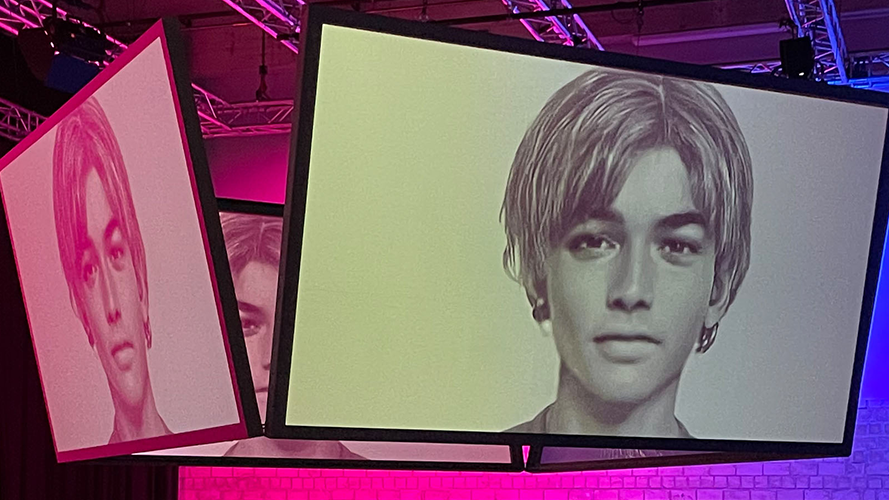
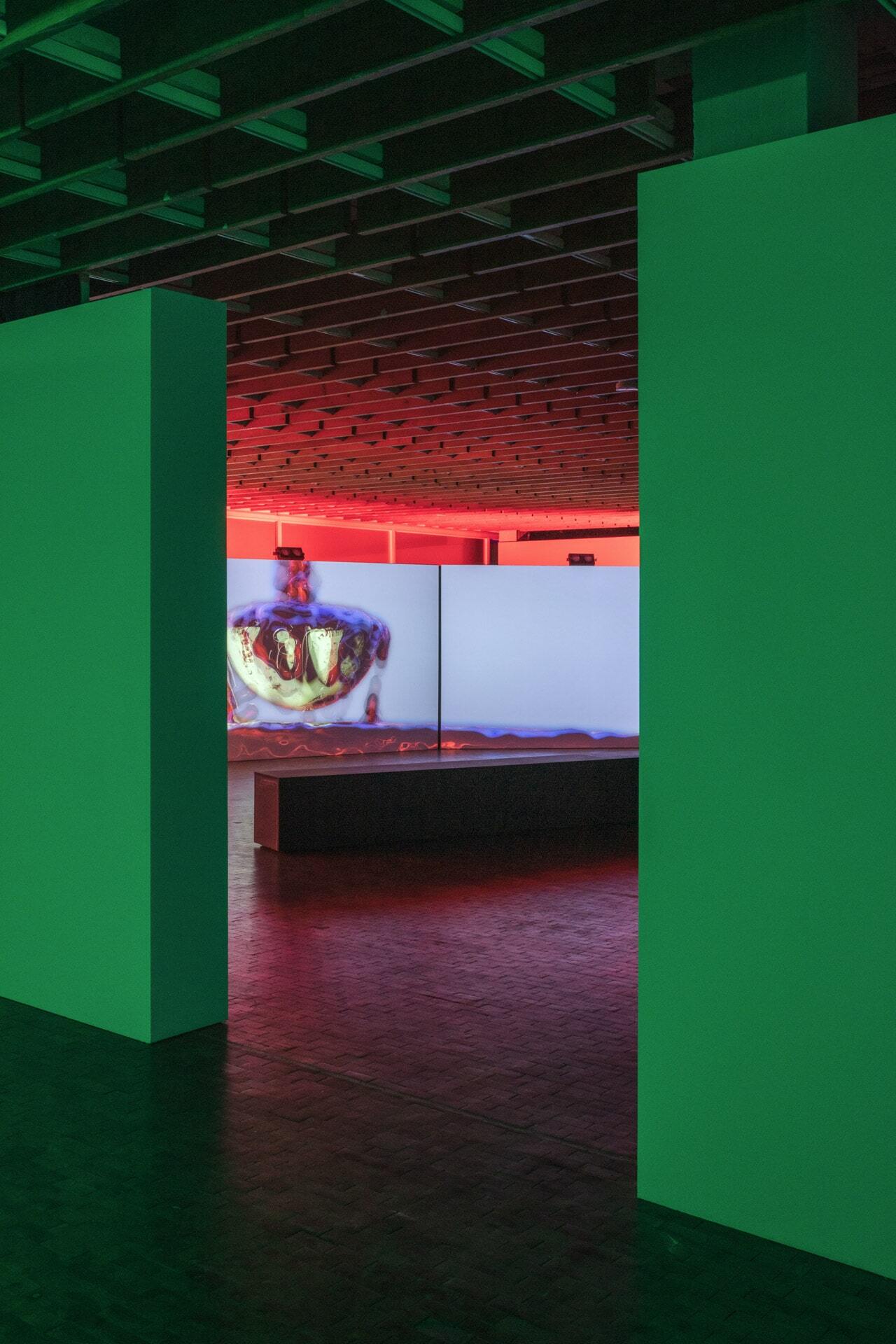
SAAI Factory is an art project initiated by the Hamburg-based artist Christoph Faulhaber. The performer, filmmaker, and author is known for his surprising, bold, and mind-boggling projects that address socially relevant issues and institutional critique.In 2021, SAAI Factory conducted a symposium, a workshop program and an international interdisciplinary hackathon. The presentation of SAAI Factory is a comprehensive collaborative approach presenting the whole ecosystem: the award winners, selected projects from the competition, accompanied by works from associated members, partners and collaborators. The exhibition is showcasing artworks along the intersection of Art and AI enabling to view the interactive human-machine-process. While questioning “art” as a merely human product SAAI is offering an act of rethinking, rewriting, reorienting.
Identity of an Island
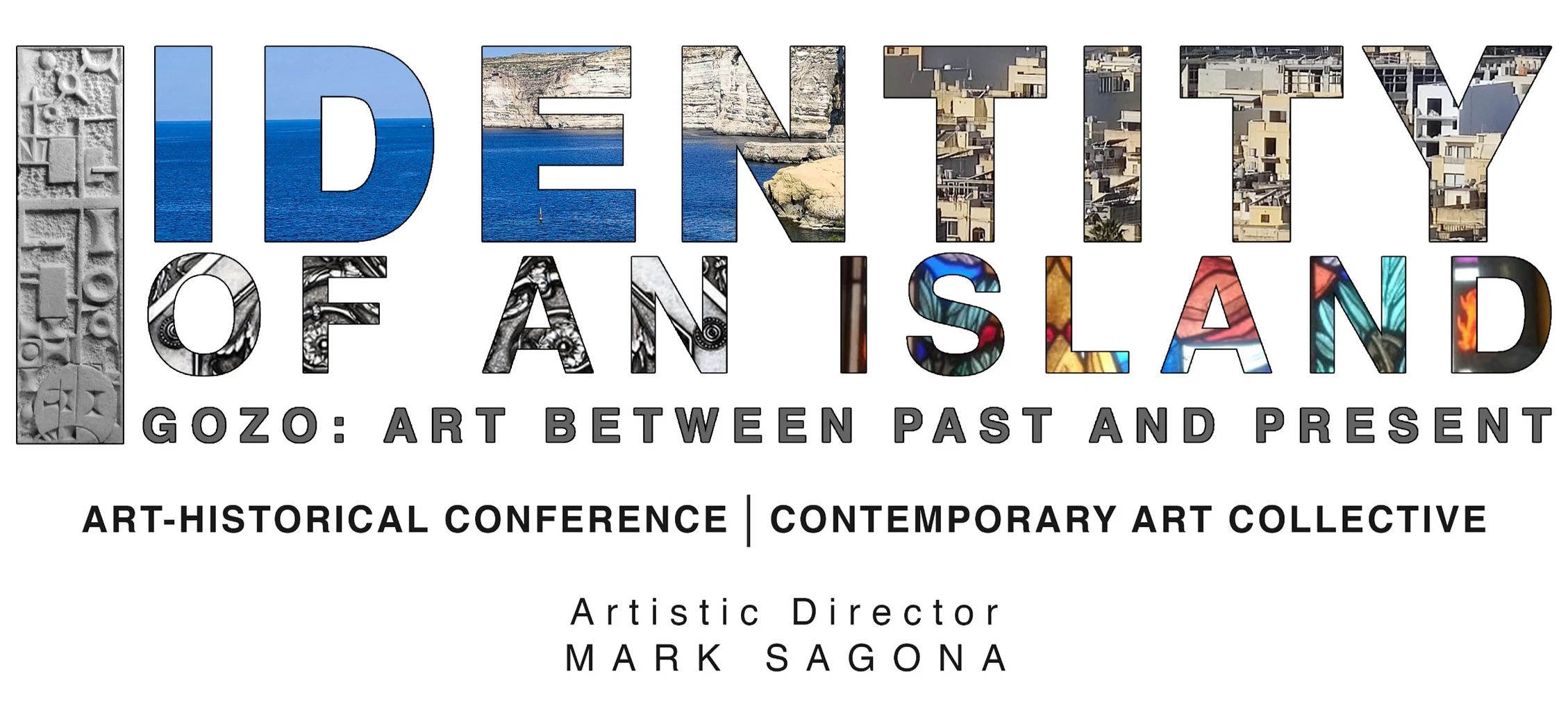
This event is a vehicle for the celebration of Gozo’s identity in a two-pronged, interlinked manner: through the organisation of a contemporary art collective under the theme of Alternative Perspectives, and an art-historical conference entitled The Artistic Legacy of Gozo, thus linking Gozo’s artistic legacy with present artistic production. The event is under the artistic direction of Dr Mark Sagona, visual artist and resident academic in the Department of Art and Art History at the University of Malta. Both events will take place during the month of May 2022 at the newly-refurbished complex of the Teatru Astra in Victoria, Gozo.
Meta-Landscapes – Representations and Perceptions
An exhibition of moving image works by twelve renowned international artists. Norbert Francis Attard (MT), Vince Briffa (MT), Robert Cahen (FR), peter campus (USA),Terry Flaxton (UK),Gary Hill (USA), Madelon Hooykaas (NL), Beryl Korot (USA), Chris Meigh-Andrews (UK), Michael Snow (CA), Yeoul Son (KR) and Steina Vasulka (IS/USA). This exhibition is centred on the theme of landscape, presenting work by artists who have pioneered the electronic moving image as an art form. The intention is to present a diverse range of attitudes and approaches to the genre, featuring works that explore the potential of the moving image to represent subjective, emotional or imagined exterior spaces. The exhibited art works incorporate or depict the artist’s personal, intellectual or cultural perspective through images of the natural world- often, but not always in juxtaposition to man-made artefacts or situations.
Valletta Tech Summit IoT
By 2023, there will be 15.9 billion connected Internet of Things devices worldwide. There couldn’t have been a better time to delve into the fascinating realm of IoT!
Valletta Tech Summit is hosting the first-ever Internet of Things summit in Malta, bringing together IoT enthusiasts from around the globe to brainstorm together, test out new products, and discuss what’s happening in the IoT industry.
After Progress
A companion to the After Progress (2022) monograph, published by The Sociological Review, the After Progress Digital Exhibition is the result of a multiplicity of collective efforts to weave together collaborative and multimedia forms of storytelling that might help us envisage ways of living and dying well outside of the modern coordinates of progress, drawing inspiration from the “After Progress” symposium series held in 2019.The notion of “progress” is arguably the defining idea of modernity: a civilisational imagery of a boundless, linear, and upwards trajectory towards a future that, guided by reason and technology, will be “better” than the present. It was this notion that placed techno-science at the heart of modern political culture, and it was the global unevenness of “progress” that imagined European imperialism as a civilising mission inflicted upon “backward” others for their own sake. The colonial, rationalistic, and ecocidal consequences of the story of “progress” have been laid bare, yet progress remains a ruling idea capable of governing our imaginations today. At the same time, the ruins of progress are teeming with divergent worlds and collective experiments whose stories upend modern dreams, cultivating plural value-ecologies of living and dying with others on Earth. How to intensify them? How to make them felt?In 2020, amidst the profound upheavals brought about by the COVID-19 pandemic and the many public health responses to it, we issued an open call for storytelling proposals from groups and individuals from around the world, with stories that might help us envisage ways of living and dying well outside of the modern coordinates of progress. After over 175 initial proposals from every corner of the world (by artists, activists, academics, students, and many other people from different walks of life) and a long and collaborative process of development and curation, this exhibition of over 60 “stories” in a variety of genres, media, and styles, is one collective response to that call.But it is also more than that. Composed collectively by contributors, curators, designers, and collaborators alike, all navigating and negotiating lockdowns and social distancing measures and a plethora of other restrictions on our modes of sociality, this exhibition is also a living archive, a testimony of what happened and what can still happen in the interstices of such distances, when we insist in spite of all on thinking and being together (apart). And because any “after” to progress necessarily calls for the plural, what one will find here is a veritable cornucopia of experiments in storytelling that are speculative, ethnographic, poetic, drawing on or reinventing any and every genre: SF, nature writing, poetry, aphorisms, brief dramas, short films, interactive webpages, letters and epistolary forms, fictional encyclopaedia entries, instructions, auditory compositions, and many more. They each raise and pursue their own questions and their own possibilities, thickening the present through the many disparate yet interlaced threads they weave in their divergences and tensions.
the ordinary lives of women
One pitfall of feminist narratives can be to separate the female condition from ecology, economy or nationalism; to detach it from what constitutes and sustains it. Another misleading tendency is to place the limelight on women’s prominent achievements, forgetting the daily struggles many face in order to maintain their environment. These are the main issues The Ordinary Lives of Women exhibition challenges.The ten female artists within this exhibition approach the multi-faceted lives of those identified and identifying as women around the world. They address the mundane in the revolutionary and reveal the revolutionary within the mundane. Going beyond iconic and visible moments of feminist acts, they explore how other, less conspicuous acts, such as radical care, can disrupt and sabotage established power, reflected in Antigone’s ultimately fatal refusal to leave her brother’s corpse unburied. Here, the artists do not necessarily defend any feminine or female essence, but rather attempt to reclaim a space for female politics and restate how power shapes every aspect of women’s lives. What may be common to all the works in the exhibition are the quandaries in which women find themselves daily. Women are possessors of bodies which at the same time are publicly owned. Patriarchy offers little recognition of the daily gestures that women implement in order to keep unofficial history alive, to defend the rights of the undervalued, to work and care simultaneously; in other words, the wide variety of women’s modes of resistance.Placing the limelight on the achievements of individual women leaves little space in which to acknowledge the lives of women on an equal footing, and with equal rights and respect. The Ordinary Lives of Women, instead, gives visibility to the mundane, to its constraints and its revolutionary potential. There can be revolution in the mundane, just as there can by mundanity in the revolutionary process.
Co-curators: Elise Billiard Pisani, Margerita Pulè
Exhibition design: Noura AbdelhafidhFilm
programme: Nicole Bearman
Catalogue: Ann Dingli
abandon all hope ye who enter here
transmediale creates a space for critical reflection on cultural transformation from a post-digital perspective. For over thirty years, the annual festival for art and digital culture has been bringing together international artists, researchers, activists, and thinkers with the goal of developing new outlooks on our technological era through the entanglement of different genres and curatorial approaches. In the course of its history, transmediale has grown from its beginnings as VideoFilmFest to one of the most important events for art and digital culture worldwide.Beyond the yearly event, transmediale is a transversal, dynamic platform with a vibrant community and a strong network that facilitates regular publications and year-round activities including commissions and artist residencies. One of transmediale’s closest cooperation partners is CTM Festival. The German Federal Cultural Foundation (kulturstiftung des Bundes) has supported transmediale as a cultural institution of excellence since 2004.
Such stuff as worlds are made on
Reflecting on human time-scales, alongside the deep time of the universe, this project explores possible inclusive futures via world-building and speculative art practices, while consciously avoiding the replication of colonial models. Ultimately, the project questions what kinds of new worlds can be created and what kind of rules these worlds will have to follow.
Informed by Donna Haraway’s Speculative Fabulations this exhibition looks towards cosmologies and ecosystems for inspirations, answers, and prophecies. Exploring practices that are speculative rather than empirically scientific, it reflects on the limits of human knowledge of our own planet, alongside humankind’s increasing desire to extend itself to neighbouring planets and planetary systems.In very recent years on the human time-scale, we have witnessed multiple moon landings, frequent image flow from Mars and the neo-colonial ambitions of a small number of billionaires. This project shifts the perspective towards non-privileged humans, nonhumans, biomes and Martian life forms in order to reflect on space colonisation and planetary time.Looking back through millennia, the project imagines the births and deaths of planets, the creation of the cosmos, the universe, and our home the earth. Looking forward, the project speculates on how other worlds are being explored or created, and questions if space really is humankind’s final frontier.New and existing works – and the interaction between them – seek a deeper understanding of the origins of humankind in cosmological, geological and evolutionary terms that can serve to develop long-term evolutionary perspectives. Is humankind struggling in its capacity to face up to the existential crises it is facing? What can we learn from other life forms that have lived through similar extinction-threatening events? And will future generations be born into?
The exhibition is curated by Antje Liemann, Margerita Pulè (Unfinished Art Space) and Letta Shtohryn (Whatdowedonow?)
Website design
: Letta Shtohryn
Technical support: Andrew Pace
Catalogue design: Christian Lorenz
Communications : Manuela Zammit
This project is supported by Arts Council Malta
Remote Chaos Experience
The Rise and Fall of “Social Bot” Research
Painting Tech Dystopia: How the West tells itself fairytales about Asia – and believes they are real
Van Gogh TV – Piazza virtuale Hallo hallo ist da jemand?
Union Busting What is it and why you should care
Day to Night Timelapse Photography: “The Holy Grail”
When Wikileaks bumped into the CIA: Operation Kudo exposed
How to add Critical Thinking to your Making
“Information. What are they looking at?” A documentary on privacy for the broad audience.
Julian Assange and WikiLeaks: anatomy of a persecution
Stop general data retention in the EU – current plans for mass surveillance
Chinas Sozialkreditsystem: Das gefährlichste Bonitätssystem der Welt
Warum personalisierte Werbung verboten werden muss
Non Guided Tour
Imagine being dropped on a virtual map, at a random point exactly 100km from Neuer Berliner Kunstverein. You find yourself on a small dirt road with only minimal indicators of how to get back. The challenge is to navigate back to n.b.k. one click at a time.The piece is based on Tomas Schmit, Sanitas – 200 Theater Pieces from 1962:“A bus carries the audience 100 km away. There the audience is deposited.”Only, instead of being abandoned together with a bus full of fellow visitors, you are now abandoned in the comfort of your home on an online map. Walking is in street view with minimal markers and the challenge is to find your way back to Neuer Berliner Kunstverein in the center of Berlin.December 2021<3 !Mediengruppe BitnikCommissioned by Neuer Berliner Kunstverein for the retrospective of Tomas Schmit