CAT: Conference
DAY: Fri 30.01.
DUR: 90 min
PLC: hkw k1
Henry Warwick DATAFIELD2
A Temporary Autonomous Field Off the Internet
DATAFIELD is an ongoing artwork based in common computer technology operating as a Temporary Autonomous Field off the Internet. While DATAFIELD(1) was based on a mounted WIFI router, DATAFIELD2 and DATAFIELD3 – hosted at the foyer of transmediale 2015 – are units that can be moved and can be hidden.
DATAFIELD2 is a Network Attached Storage Unit that takes the theme of common ordinary household information appliances to the next level. Its low cost consumer unit is a significant part of the aesthetic and political choices surrounding the project – anyone can buy one of these devices, fill it with data and leave it in a public place. It is easy to programme and to access files, a common browser can be used. DATAFIELD2 of course has some limitations, in terms of bandwidth but at the same time it offers some freedoms. As it is battery-operated, it has the advantage that it can be moved constantly; it is nearly impossible to find or stop. DATAFIELD was and is *not* connected to the Internet – this is a strictly offline operation, a voluntary *post-Internet community*.
DATAFIELD
Henry Warwick (School of Media, Ryerson University)
DATAFIELD is a work in technology. It is similar to the PirateBox concept by David Darts, but differs in important ways, as this is not a box of piracy. This is a field of sharing. This installation, as an electromagnetic field, operates as a field of possibilities. It invites, indeed, requires participation to exist – otherwise, it’s just another electromagnetic field. To participate, the user must have a device that can access a WIFI router and mount a drive. How to locate the open WIFI connection DATAFIELD and access to the DATAFIELD drive will be provided with explicit instructions in the Conference space. If for some reason the WIFI stops working, Ethernet cables will be provided, as DATAFIELD is *not* connected to the internet. Within DATAFIELD, you can share files with others. The more people share, the more they gain from involving themselves with this piece and with others. While DATAFIELD responds to enthusiasm, as greater involvement creates a richer dataset, the WIFI router has a limit of ten users at a time. Operating as a Temporary Autonomous Field, this window will only be open the duration of this exhibit. Again, the DATAFIELD router has *no* access to the internet — this is a strictly offline operation, a voluntary *post-internet community*. This is for you, here, now. Remember, sharing is caring.
“What does the ‘Capture All’ logic entail and what does it mean to live in an algorithmic world?
How does the desired ‘full take’ shape not just the contemporary lived environment but our very being, working and acting within it?
The idea behind a ‘Capture All’ society is not one based on a totalitarian model; it rather reflects a new system of organisation which, based on the datafication, quantification and correlation of everything, can be predictive and to some extent pre-emptive, allowing new modes of regulation and control.
Playful, competitive and productive as a ‘capture all’ society claims to be, it constantly aims for an accelerated optimisation surpassing any limitations between life and work. Its rankings and ratings, mappings and visualisations depict a gamifying condition where individuals never rest but are continuously connected and active, allowing behavioural patterns to become detectable and recognisable. But are we then faced with a new type of governmentality towards a calculative life?
And how do we respond to it? Which discourses are still needed and which counter-practices can be employed to provoke change in a datafying world?”
reSync was invited to collaborate on the Dowse project.
By replacing the outdated proprietary ISP ‘gateway’ with an open and user-visible device, Dowse creates a new platform that leverages its topologically unique access and influence in the domain of the local-area network. It introduces a visible, malleable, knowable communications hub to the language of the small network.
Dowse seizes on the power of the technologically/topologically necessary gateway/hub role to create development opportunities which cannot exist on other platforms. Dowse becomes the locus of a specific new class of end-user-visible applications which are able to perceive and affect all devices in the local sphere, whether they are open or closed.
Moving above the platform of Dowse, it is in touching upon the Internet of Things that a glimmer appears of what may be Dowse’s killer app(s). These are the applications of Dowse in which human opportunities appear to interactively define the Internet of Things at a high level. The entrance or departure of a device from the local IoT ecosystem is accompanied by audiovisual interactive aspects. Such interactions extend to the new presence or absence of a communications channel, for example between an electrical meter and a corporation. The software explorations that can appear in this domain, enabled by the Dowse platform, can bring individual awareness, preference, and empowered influence to the network/IoT as its own organ.
Further information can be found here.
From 31 January until 1 February FOSSem 2015 will take place.
FOSDEM is a free and non-commercial event organised by the community for the community. The goal is to provide open source software developers and communities a place to meet to:
Participation and attendance is totally free, though the organisers gratefully accept donations and sponsorship.
During Transmediale 2015, reSync will promote collaborative synchronisation services and introduce a growing P2P exchange network of free media resources, synchronised between those in London [own], Athens [awmn] and Berlin [freifunk], that sidestep the rising sense of network surveillance and preserve privacy whilst continuing to enjoy free media exchange in public and over free information infrastructures wherever they flourish.
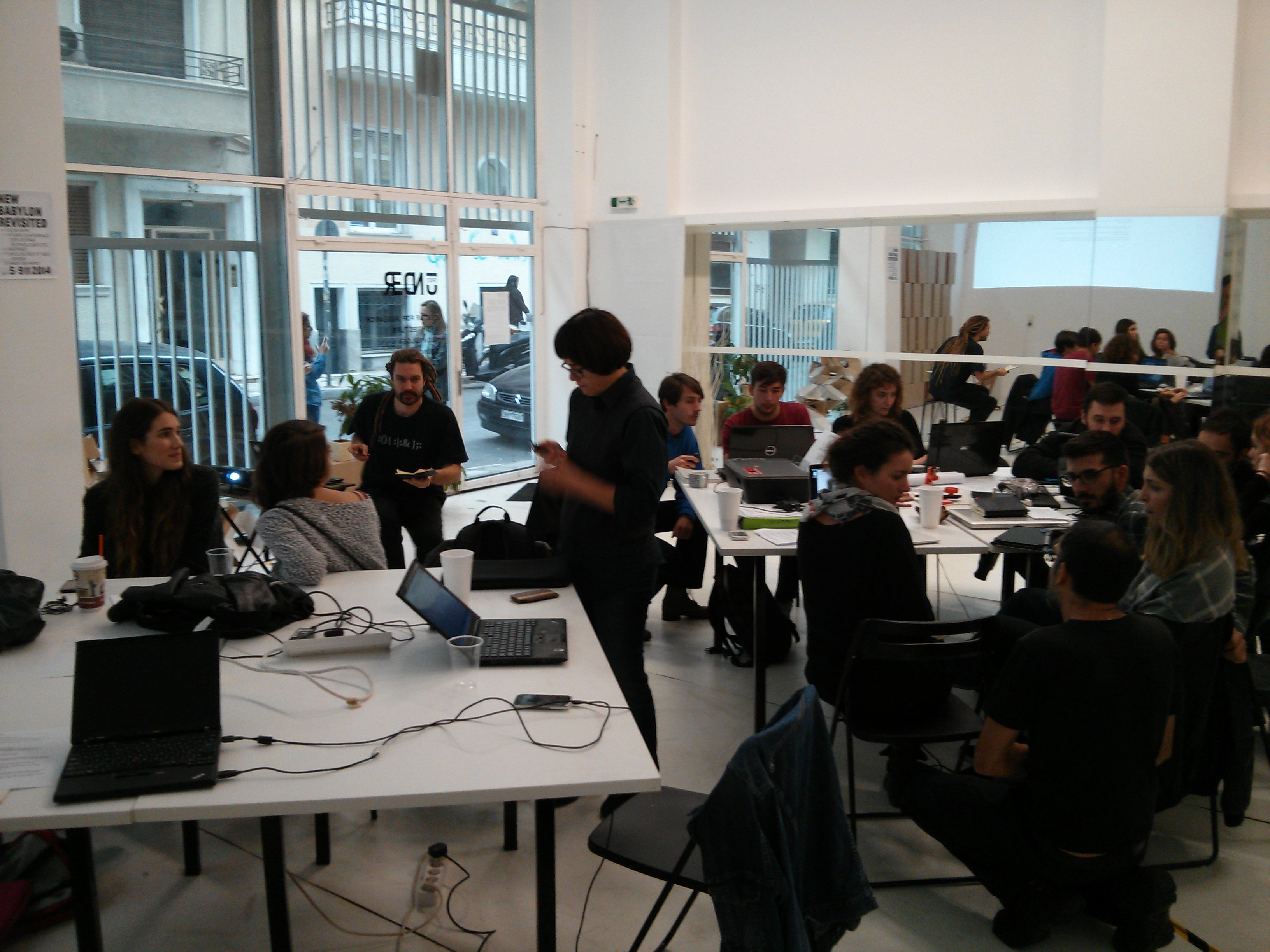
 Join us in the lobby area of Haus der Kulturen der Welt on Friday 30th January to make sync code badges and configure your media files, messages and phone things to reSync @ Capture All.
 Pick up a flyer sheet and claim a reSync ‘key’, print posters and press your own badges. Each badge features the unique QRcode to promote media from your smart phones, tablets and pc’s using Bit Torrent Sync app. Anyone then scanning the code or exchanging the key will be able to receive new images texts and sounds as you add them during Transmediale and therafter.
See the howto for more details.
Each reSync is then automatically relayed across our international network nodes using Syncthing (floss) then available on open wireless networks in Athens, London, Lueneburg and Berlin (so far!)
see this reSync All video for some instructions on the process…(ish)
This follows on from ‘reStreet’ workshops in Athens 2014 and will run parallel to the “Enclosed Athens Disclosed”/”Glossary of Subsumption – Projecting a Collective Collation” sessions.
It is no secret that ‘pirate’ sites are amongst the most popular in the world. There are already huge numbers (hundred of millions) of P2P users, and the number continues to grow despite technical and legislative attempts to slow or censor P2P technologies. Media industries are quite unwilling to accept the inevitability of filesharing as a significant, if not the most significant, global media distribution system. The continued belief that intellectual property protection, Digital Rights Management, regulation of ISPs etc. will solve the ‘filesharing problem’ prevents tinkering in this area is being overturned.
Many thanks Rob Canning for the Imagemagic qrcode compositing!
reSync visited Video Vortex 10. “Video Vortex is a travelling conference series concerned with online video. Established in 2007 by Amsterdam based Institute for Network Cultures, the conference since then took place in Brussels, Amsterdam, Ankara, Split, Yogyakarta and Lüneburg.” (Video Vortex 2014)
The Spectacular & The Power of Images with Oliver Lerone Schultz, Adnan Hadzi, Ersan Ocak, Paola Barreto, Facilitator: Ebru Yetiskin
Spectrals of the Spectacular
We know by now, that the social is also visually constructed, that there is a struggle for ‚The Right to look‘ and that social visions are projective, contested as well as fractal. We want to present the outcome of the ‘Spectrals of the Spectacular’ workshop, held at the Brazilian BTS (http://www.bts.re) conference, discussing how centralized visual event streams and orchestrations are producing alternative visual splinters, fractions and specters that also travel in fragmentary ways across the globe, making visible new landscapes and hidden horizons of meaning, i.e. ‚specters‘ to the current system and ‚mode of projection‘.
While we are interested in the geopolitical aesthetic of a (to be) pirated reality of the ‘non-territories’ which resist the address of the ‚national (interest)‘ and subsumption to the current globalized society of control and spectacle, we present some results from the ‘Spectrals of the Spectacular’ workshop, reviewing in an exemplary fashion the particular resistancies to the FIFA World Cup 2014, how they travel around and haunt the global imaginary and feed from and back to the non-aligned social intellect.
In this presentation/talk we aim at introducing some conceptual entry points into this longer term project, which in future engagements also wants to engage with the topic of pirating and (broken) projections around the New Global Spectacle and their relevance to a contemporary theory of the ‘moving image’.
Part of the reflection will be a discussion around reasons to organize this theoretical engagement by building a trans-local repository around ‚Spectrals of the Spectacle‘. We hold that a theoretical reflection of these spectralities is itself to take on the form of a decentral project, engaging with fleeting images and spectralities. (Oliver Lerone Schultz & Adnan Hadzi)
ReSync are pleased to be joining the Goethe Institut Athen for a cluster of 4 workshops around the topic of the city and autonomous networks this November, 6th – 9th called “New Babylon Revisited”
Friday 7th and Saturday 8th November; The reStreet workshop @ Space Under will focus on AWMN and it’s leading role as infrastructure pioneer, techniques to help advance use of the network and promoting the access and synchronisation points we discover around the city – with maps, printed material and social mediation.
We will touch on aspects of open infrastructure and software philosophy as well as explore secure methods for file sharing and data exchange which promote the wireless network and acknowledge the the scope for services as well as introduce some of our own.
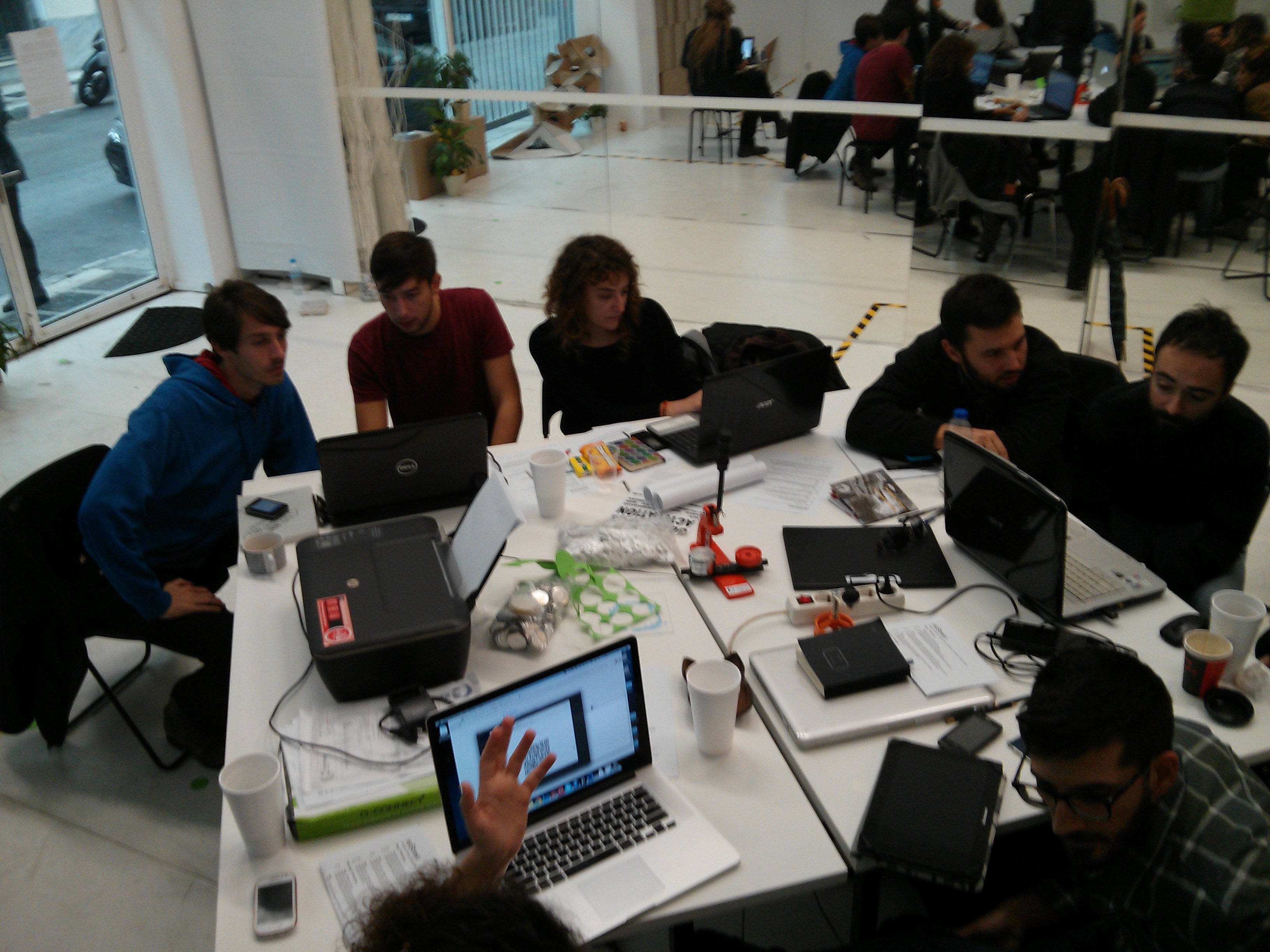
Sunday 9th November is the the final event during which we will walk/drift from place to place and re-discover our street-sync signalling and signage, play with the network and discuss the experience of New Babylon.

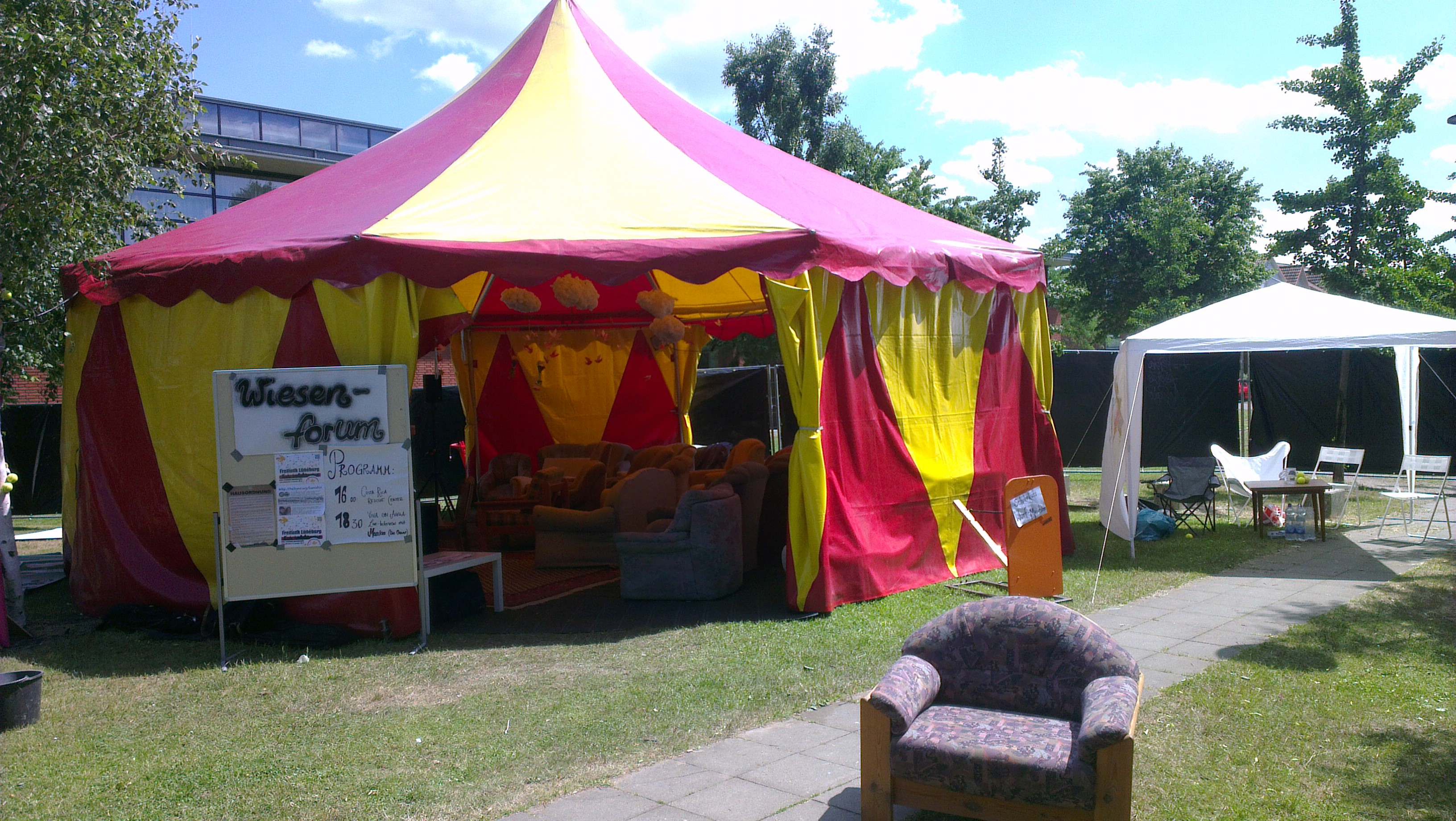 reSync set out on an ambitious programme of activity to mark it’s establishment as a startup company, picking up where deckspace.tv rounded off it’s research phase in Leuneburg.
To begin we formed a collaboration with the Freifunk Leuneburg group and invited them to join us for a few days preparation and two days of festivities on the Leuphana University campus.
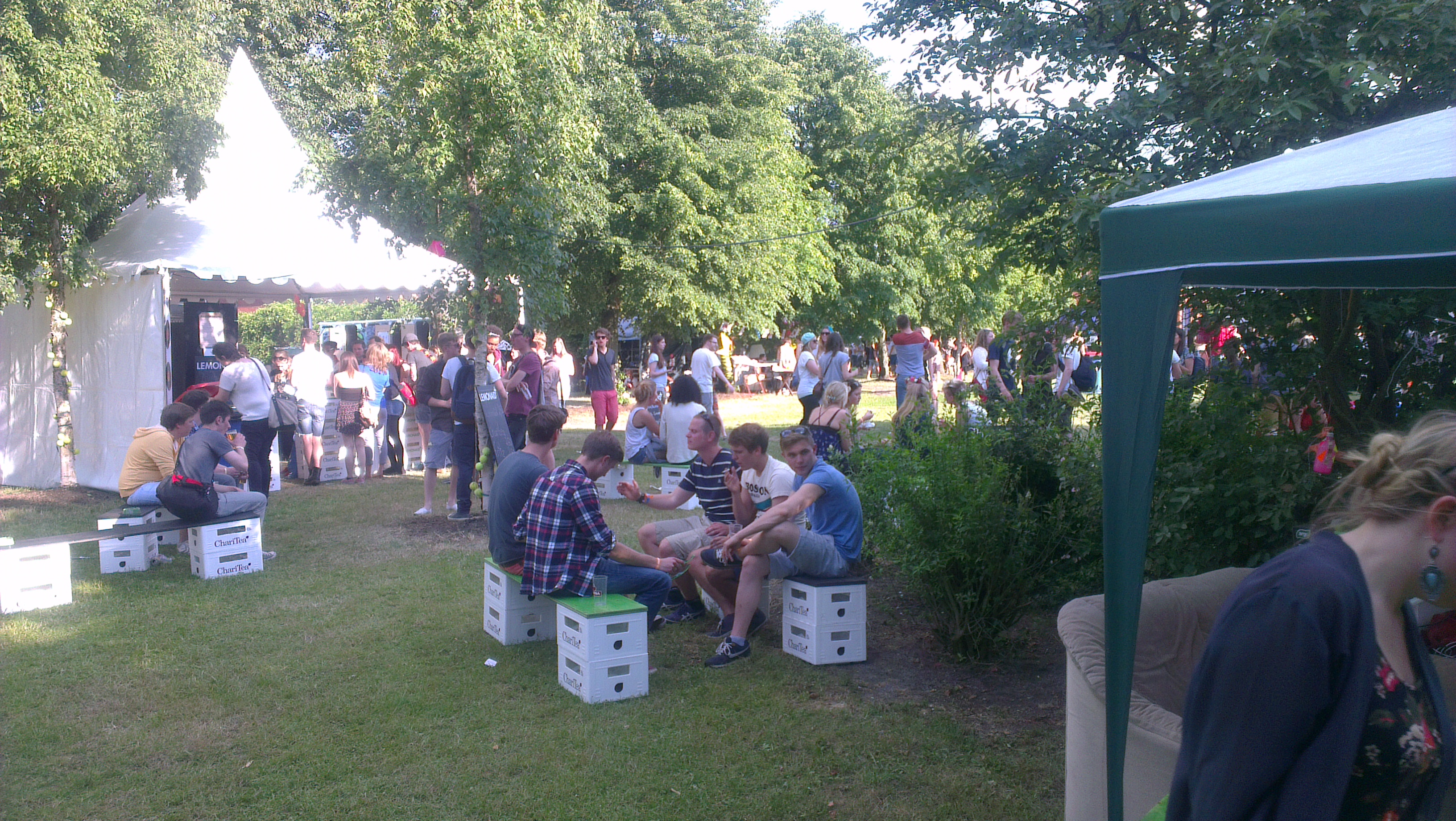 Lunatic festival is held each year and operated by students of all faculties in the University as part of an enlightened in-house work experience period for second and third years. We first met with previous years chief co-ordinators at sessions in Freiraum during 2012 where we first proposed our involvement and set up the process for the following years festival. They estimated 2000 visitors a day would attend to share the love of summer and end of term!
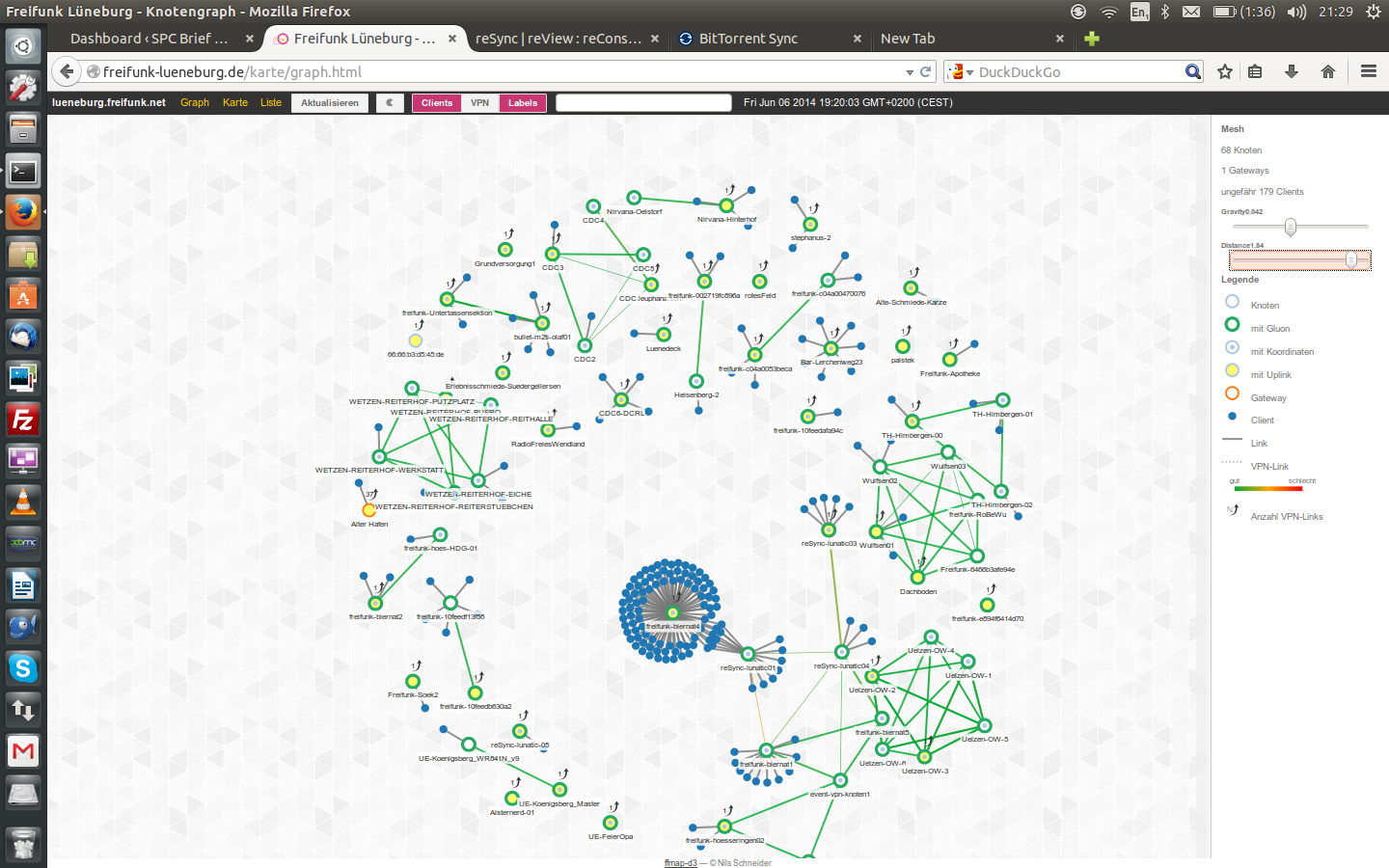 With our invitation in hand we promoted Freifunk Leuneburg as wireless infrastructure providers at the festival an ambitious but achievable prospect and one which drew in some great characters from the local group all of whom chose to work above and beyond the call to put in place the physical and radio interlinks as well as install and test the dozen wireless access points required to put a universal access network into place for everyone to use.
To reSync Lunatic, we set up an array of pre-configured Bit Torrent Sync secrets to facilitate file synchronising between attendees at the festival via qrcode graphics printed on a series of custom button badge artwork sheets. Each Lunatic (festival visitor) claimed a badge from us and pressed it together in our workshop, along with it’s write access ‘secret’ enabling them to present sounds texts and images from their smartphone to anyone willing to scan their badge and at any location in the festival area.
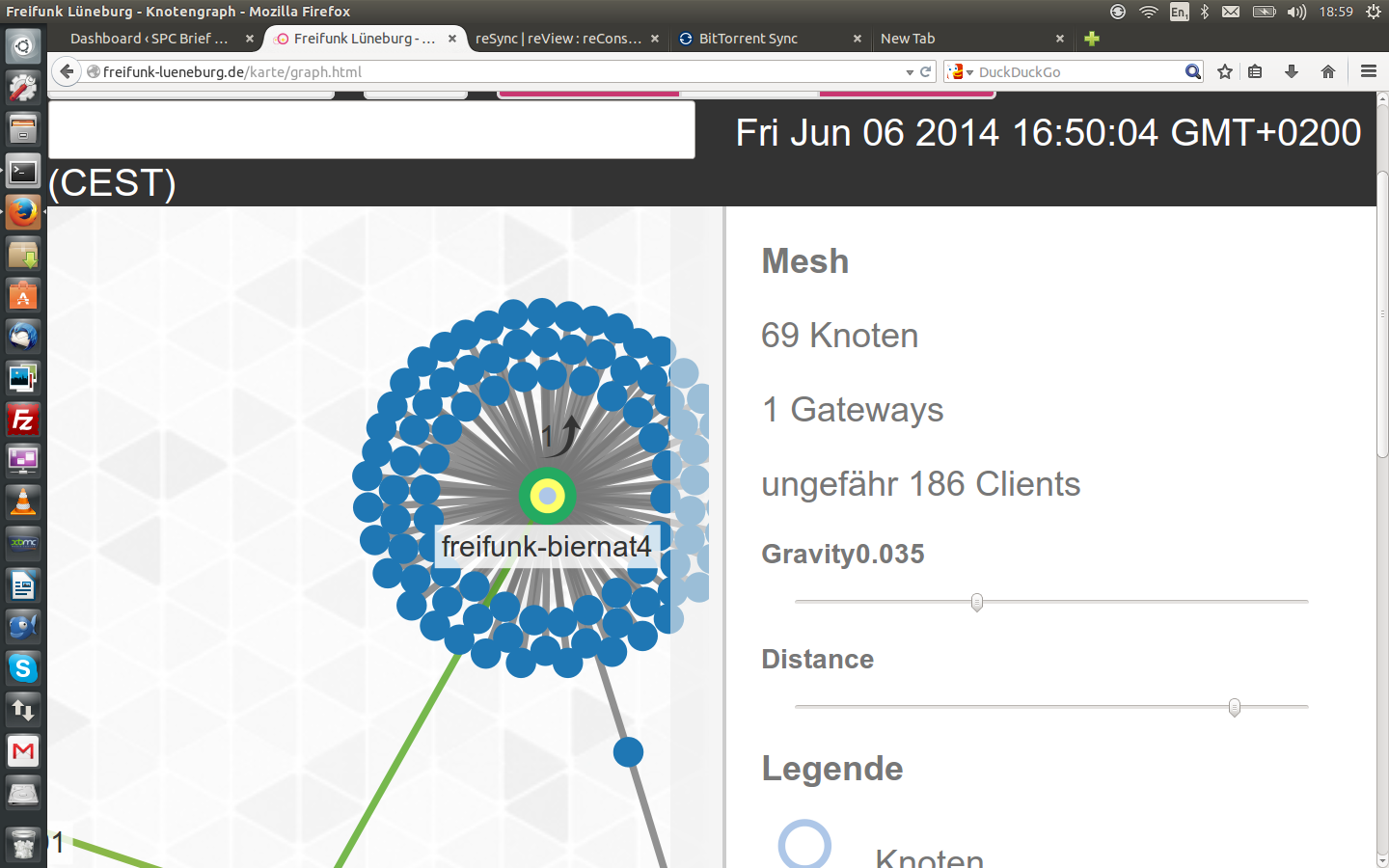 We all then setup camp in a quiet corner of the spielwiese and proceeded to monitor the useage of the wireless network and respond to the increasingly engaged festival goers requesting a reSync badge and support to get their smartphones sync ready and activated.